
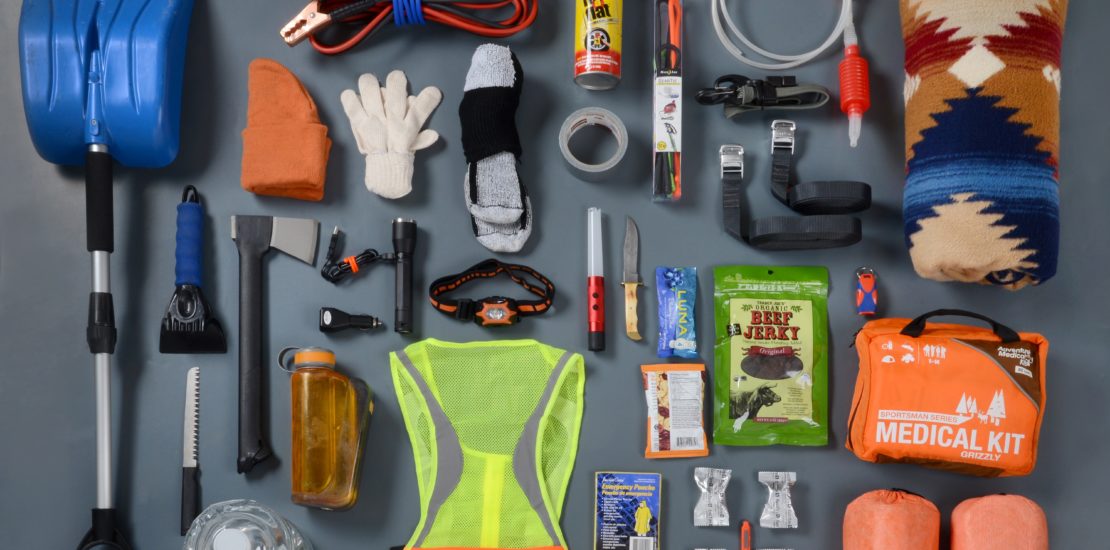
Please take a look at the link below to some winter survival kit ideas and good advice if you are stuck in your vehicle during the upcoming cold winter months!
-Warm socks, hat and mittens
|
–Multi-purpose tool or knife
|
It’s vitally important that you stay in your vehicle, warm and dry, protected from the weather.Trying to dig your way out of a ditch, or attempting to walk back to town can be fatal. Instead, call 911 to let them know your location and predicament then sit tight. Do not leave the engine running. If it’s extremely cold (-5 to -30 F) you can idle the motor for a few minutes at a time — but only after making sure the exhaust system is not damaged and the tail pipe is clear of snow and debris. Carbon monoxide can sneak up on you without warning. One minute you’re feeling normal and the next you’re unconscious. Almost 60% of the unintentional deaths caused by carbon monoxide are from motor vehicle exhaust. So don’t use the engine for heat.
If you keep your gear packed and stowed in the passenger compartment, you’re set. Settle in, put on those warm clothes (socks, hat, gloves, long underwear and fleece or wool layers) and relax wrapped in your sleeping bag or blankets. If you get out to set your flares or check on something during a severe blizzard, first put on your outer layers and goggles, then use the nylon cord to tie off a life line so that you can find the way back to your car — visibility can be as low as 12 inches!
Ventilate the car by opening a downwind window (on the side away from the wind and blowing snow) approximately 1/2 inch. Fire up your candle lantern — the candles burn for 8 hours and will raise the temperature in the car 8 to 10 degrees F. Break out your snacks — roasted nuts, dried fruit, chocolate, Cliff Bars, etc. sure taste good in a situation like this — and will provide the protein and fat you’ll need to keep warm. Use your water sparingly (you should keep 2 large Nalgene bottles in your kit) but don’t let yourself get dehydrated. In the rare event that you’re trapped for more than 24 hours, things get a little trickier, but you’ll do just fine. When you run out of water and dry food, you’ll have to do some cookin’. If the snow and wind have stopped blowing hard, gear up and head outside. Dig out a shelf in the snow, line it with your floor mats and set up the stove.
I also have included a link below that had a checklist of what to do when there is a power outage.
